
Tri-stand Pipe Vise vs Bench Pipe Vise: Which One Fits Your Worksite?
In many pipe installation and fabrication projects, most attention usually goes to the main equipment—such as pipe threading machines, roll groovers, or cutting machines. But once the work actually begins, many contractors realize that a much simpler tool can have a big impact on daily efficiency: the pipe vise.
During pipe processing, unstable pipes can easily create problems.
When threading or grooving pipes, the pipe may slowly rotate or vibrate if it is not properly secured. Operators often end up holding the pipe with one hand while operating the machine with the other.
Over time, this not only reduces efficiency but also increases operator fatigue.
The problem becomes even more obvious when working with longer pipes. On some job sites, workers may temporarily support pipes with wood blocks or other improvised stands. However, these solutions rarely provide stable support. Once the pipe shifts slightly, the processing condition changes as well.
If only a few pipes are processed in a day, the impact may seem small. But on many job sites, the same operation is repeated dozens or even hundreds of times. Small inconveniences gradually turn into noticeable efficiency issues.
This is why professional pipe installation teams often use dedicated pipe vises or pipe stands to assist with pipe processing.
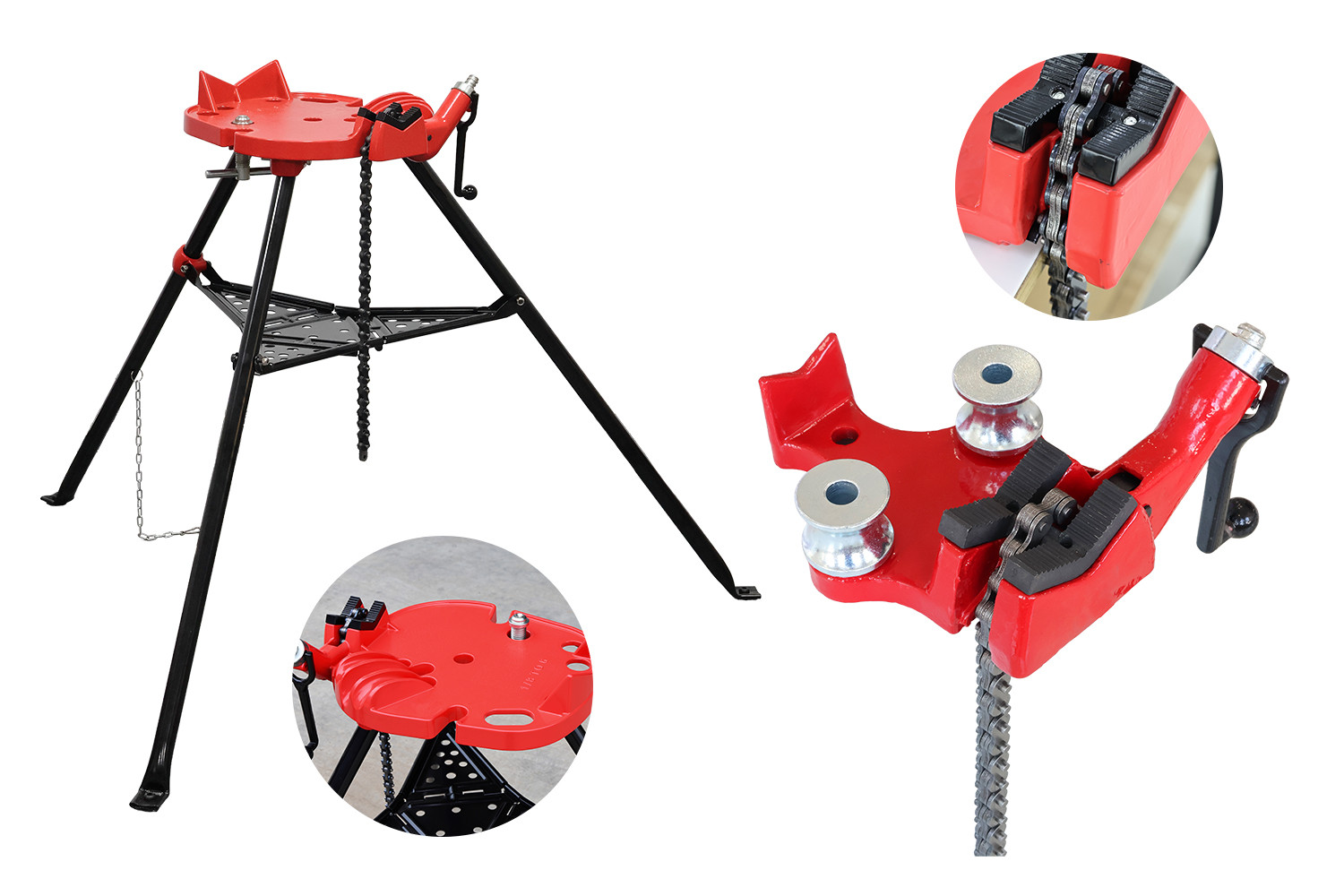
The Role of a Pipe Vise
The function of a pipe vise is straightforward:
secure the pipe and keep it stable during processing.
When a pipe is properly clamped and supported, operations such as threading, cutting, or grooving become easier to control.
For longer pipes, the stand also helps carry part of the pipe weight, making the overall operation more manageable.
Although the tool itself is simple in structure, it can make a noticeable difference in both efficiency and safety during pipe processing work.
In common pipe processing setups, pipe vises are typically available in two structural forms:
· Tri-stand chain vise
· Bench chain vise
While their core function is similar, their typical working environments are different.
Tri-stand vs Bench: What’s the Difference?
A tri-stand chain vise uses a three-leg stand that can be placed directly on the ground.
This design is often preferred on construction sites. Once the stand is opened, work can begin immediately without requiring a workbench. For job sites where space and setup conditions vary, this flexibility can be very practical.
A bench chain vise, on the other hand, is mounted on a workbench.
This structure is commonly used in workshops or fixed processing areas. Because it is attached to a stable work surface, it offers excellent stability and is well suited for repetitive work.
In simple terms:
Job sites → tri-stand structures are more flexible
Workshops → bench-mounted vises provide greater stability
VH401 and VH402
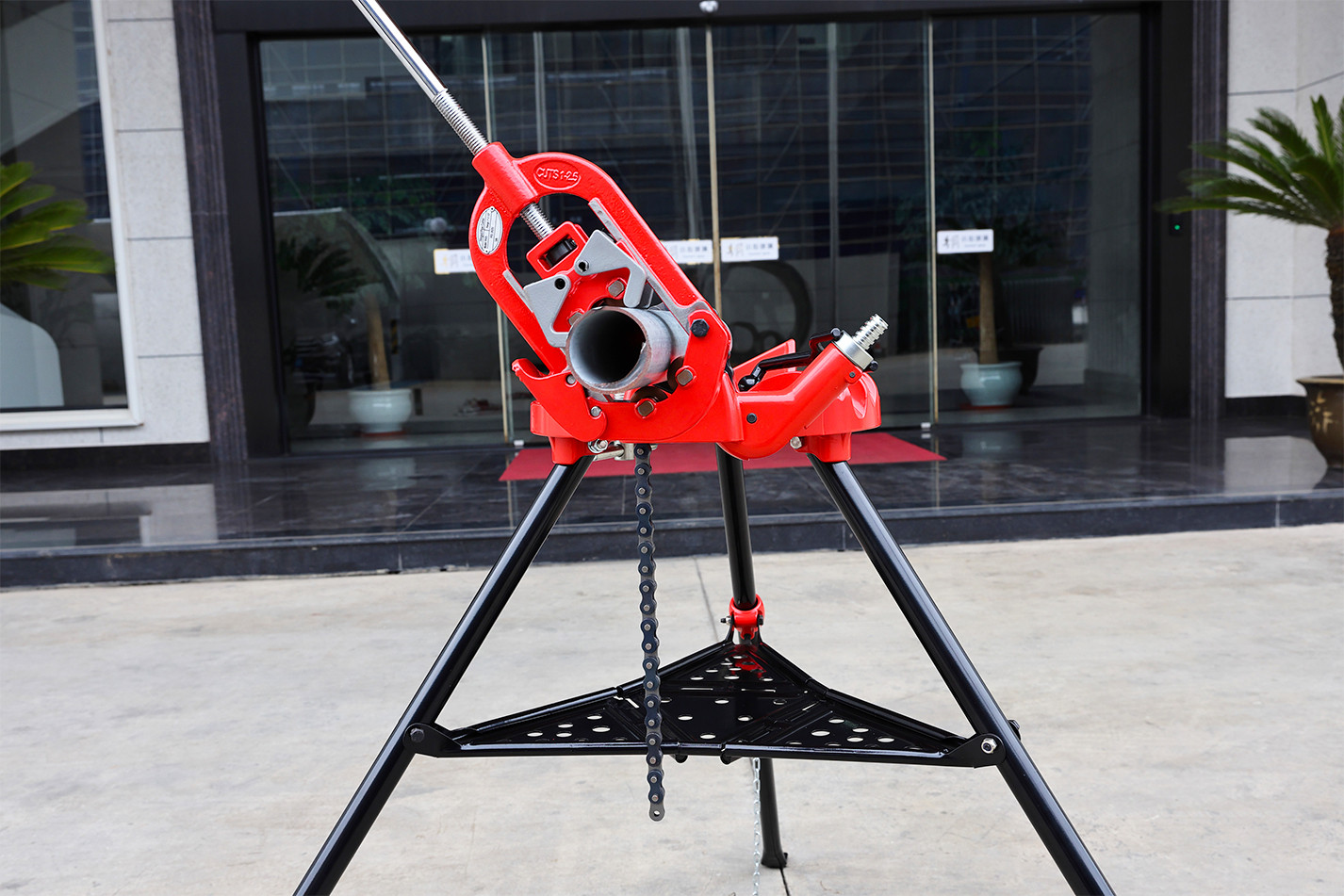
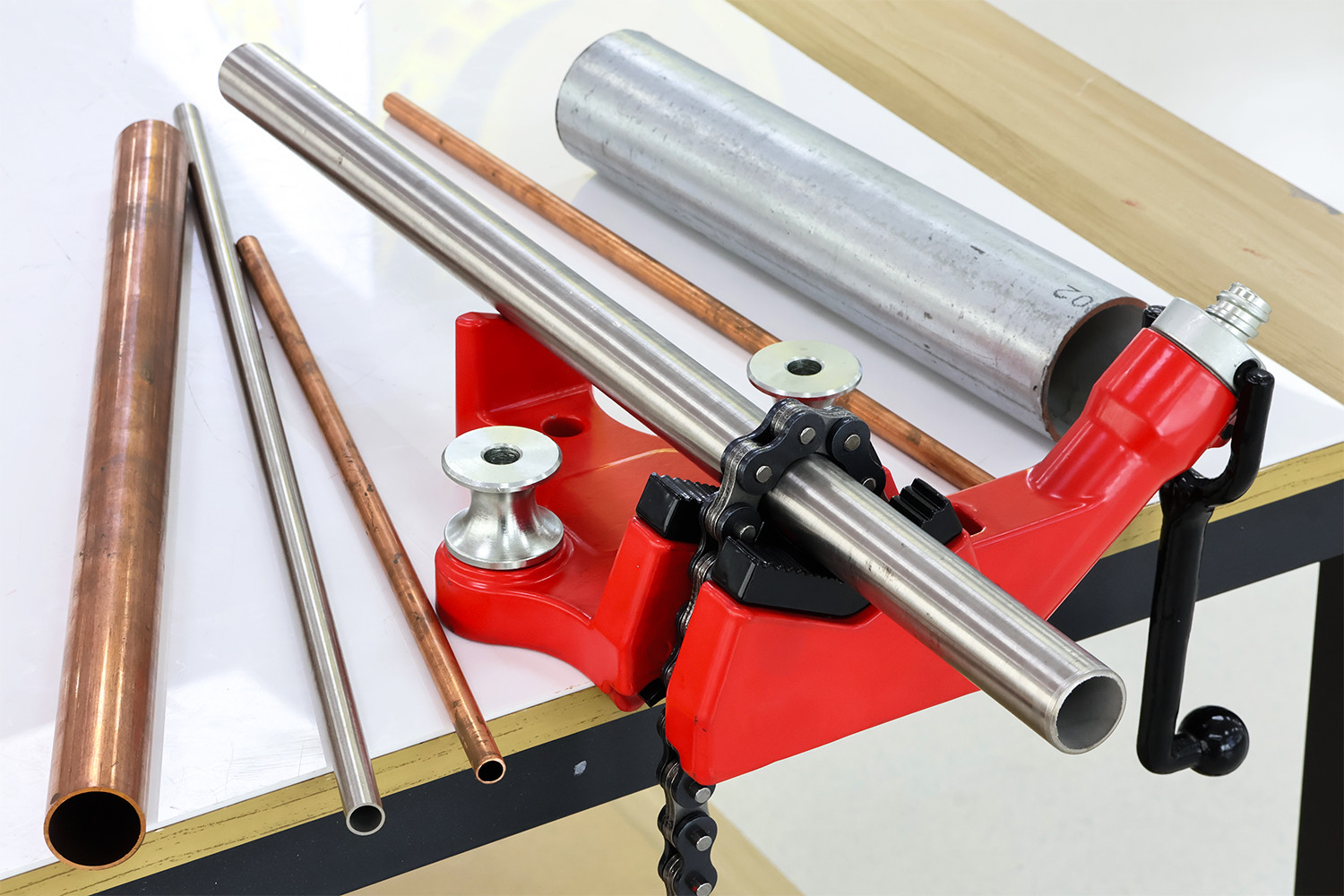
In Welping’s pipe processing tool lineup, VH401 and VH402 represent these two types of structures.
VH401 is a tri-stand chain vise designed for pipe sizes from 1/8" to 6" (3–150 mm).
Its three-leg structure provides stable support on job sites, and the foldable design allows convenient transport and storage.
The chain vise system with serrated jaws securely clamps the pipe, keeping it stable during threading, cutting, or grooving operations. The stand also includes a tool tray for placing frequently used tools during work.
VH402 is a bench chain vise designed to be mounted on a workbench.
Its cast iron construction offers durability and stability, making it well suited for workshop environments where pipe processing is performed regularly.
Choosing the Right Pipe Vise
When selecting this type of tool, the most important factor is usually the working environment.
For contractors working primarily on job sites or temporary work areas, a tri-stand pipe vise is often the more convenient choice.
For workshop environments where pipe processing is done at fixed workstations, a bench-mounted pipe vise generally offers better long-term stability.
Many professional teams use both types depending on the working conditions.
For contractors working on construction sites, a tri-stand pipe vise such as the VH401 can provide flexible pipe support.
In workshop environments, a bench pipe vise like the VH402 is often a better choice for stable pipe processing.