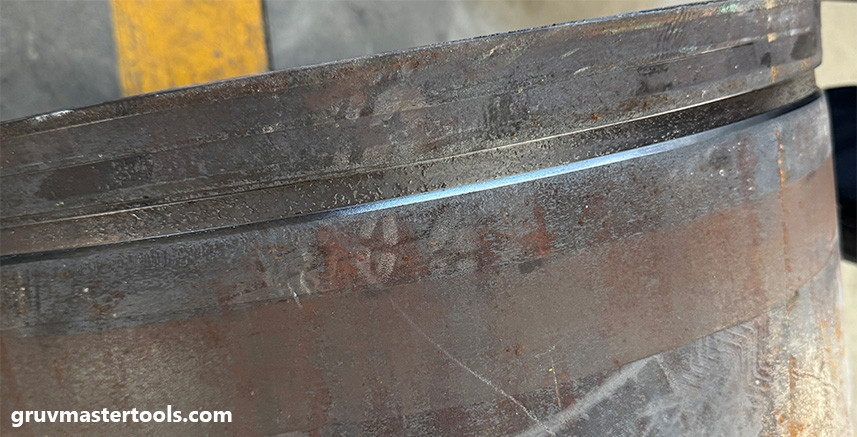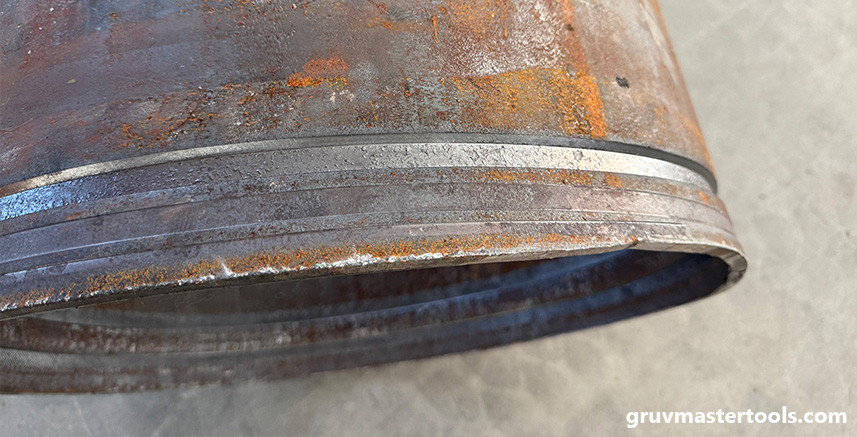
OGS vs. AGS Groove: Why Do Large-Diameter Pipes Need Advanced Groove Design?
Grooved mechanical connections are widely used in steel piping systems, including fire protection, HVAC, water treatment, and industrial applications.
Many people think that grooving simply means pressing a groove onto the pipe surface and connecting the pipes with a coupling.
However, the groove itself is much more than a simple recess. It is a critical part of the mechanical connection system, working together with the coupling and gasket to transfer loads and maintain connection stability.
So why are there different groove systems such as OGS and AGS? What are the differences between them? And why are larger pipes usually designed with a more advanced groove profile?
How Does a Grooved Pipe Connection Work?
A complete grooved pipe connection consists of three main components:
1.Pipe-End Groove
2.Rubber Gasket
3.Metal Coupling Housing
Each component has a specific function:
· The rubber gasket provides sealing and prevents leakage.
· The coupling housing contains internal keys that fit into the pipe grooves.
· The interaction between the coupling keys and the grooves creates a mechanical lock, preventing the pipes from separating under pressure.
Therefore, the groove is not simply a mark formed on the pipe surface. It is the mechanical engagement point between the pipe and the coupling.
As pipe diameter and internal pressure increase, the axial force acting on the connection becomes much higher, placing greater requirements on the groove design and coupling structure.
What Is OGS Groove?
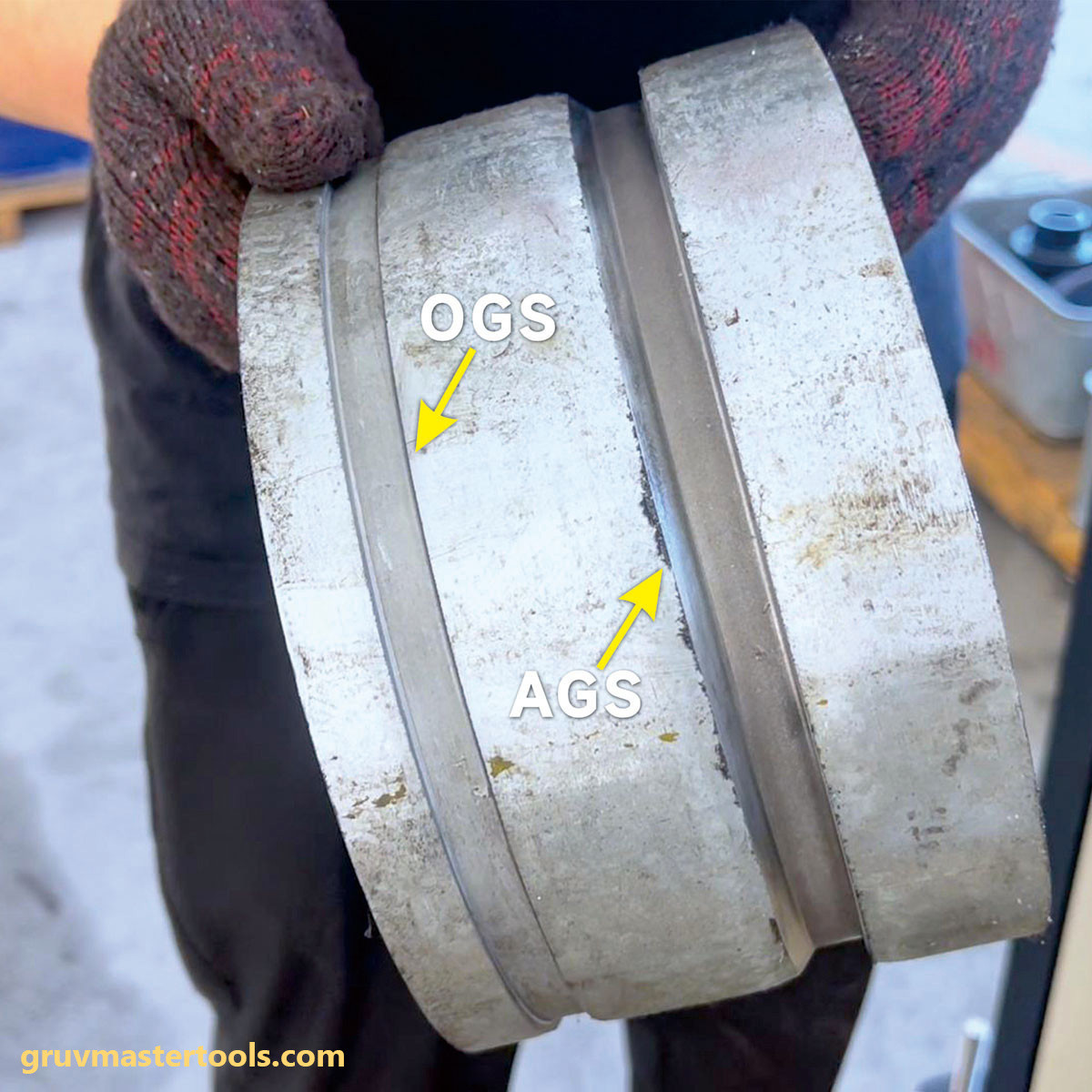
OGS (Original Groove System) is one of the most commonly used standard grooving systems in the piping industry.
It is widely applied in:
· Fire protection systems
· HVAC piping
· Building water supply and drainage
· General industrial piping
· Small and medium diameter steel pipe systems
OGS grooves typically feature:
· A relatively narrower groove width
· A shallower groove depth
· A smoother groove profile
The matching OGS coupling is designed with keys that fit this groove profile.
For most conventional piping applications, OGS provides reliable connection performance and remains one of the most widely adopted groove systems.
What Is AGS Groove?
AGS (Advanced Groove System) is a reinforced groove system developed for larger diameter piping applications.
Compared with OGS, AGS grooves typically feature:
· A wider groove profile
· Greater groove depth
· A more pronounced wedge-shaped design
· A larger contact area between the coupling and pipe
This design increases the mechanical engagement between the coupling and pipe, allowing the connection to handle higher axial loads.
AGS is commonly used in:
· Large industrial piping systems
· Mining and slurry pipelines
· Water and wastewater treatment facilities
· Power plant cooling water systems
· Large HVAC and chilled water systems
· Large-diameter stainless steel piping applications
In simple terms:
OGS is designed for standard piping applications, while AGS is developed to meet the higher load requirements of large-diameter systems.
Why Do Large-Diameter Pipes Need AGS?
This is the key difference between OGS and AGS.
Internal pressure inside a pipe creates a force that attempts to push the pipe ends apart. This force is commonly known as axial end load.
The relationship can be understood as:
Axial Force ≈ Internal Pressure × Pipe Cross-Sectional Area
As pipe diameter increases, the cross-sectional area increases significantly.
For example, when the pipe diameter doubles, the cross-sectional area increases by approximately four times.
This means that even under the same pressure condition, a large-diameter pipe connection experiences much higher separation forces.
For smaller pipes, the engagement provided by an OGS coupling is usually sufficient.
However, for large pipes such as 14", 24", or larger, the connection requires:
· Greater coupling engagement area
· Higher resistance against axial separation
· More stable coupling positioning
· Improved installation reliability
AGS addresses these requirements by using a wider, deeper, wedge-shaped groove design that increases the mechanical locking effect between the coupling and pipe.
OGS vs. AGS: Main Differences
| Feature | OGS | AGS |
| Full Name | Original Groove System | Advanced Groove System |
| Application | Standard piping systems | Large-diameter heavy-duty systems |
| Typical Usage | Fire protection, HVAC, building piping | Industrial, water treatment, power plants |
Groove Profile | Narrower and shallower | Wider, deeper, wedge-shaped |
Coupling Type | Standard coupling | AGS coupling |
Engagement Area | Standard | Increased |
Load Capacity | Suitable for conventional applications | Designed for higher axial loads |
Why Not Use One Universal Groove Design?
At first glance, using one groove design for all pipe sizes may seem simpler.
However, engineering requirements are different for small and large diameter pipes.
If AGS were used for all smaller pipes:
· Larger couplings would be required;
· More forming force would be needed during grooving;
· Equipment requirements would increase;
· Manufacturing costs would rise;
· Thin-wall pipes could be more likely to deform.
For standard fire protection or HVAC systems, this additional reinforcement is often unnecessary.
On the other hand, using OGS for large-diameter pipes could result in:
· Reduced coupling engagement area;
· Lower resistance to axial loads;
· Higher sensitivity to installation accuracy;
· Limited connection reliability.
Therefore:
OGS and AGS are not competing systems. They are optimized designs developed for different pipe sizes and loading conditions.
OGS and AGS Are Not Universal International Standards
It is important to understand that OGS and AGS are originally system names used within specific product ecosystems.
They should not be considered universal standards like ISO or DIN, where all manufacturers automatically share identical dimensions.
Before selecting a groove system, engineers should confirm:
· Coupling brand and model;
· Required groove dimensions;
· Pipe diameter and wall thickness;
· Pipe material;
· Grooving method (roll grooving or cut grooving);
· Whether OGS or AGS is required.
Even if two grooves appear visually similar, differences in critical dimensions may prevent proper matching between the pipe and coupling.
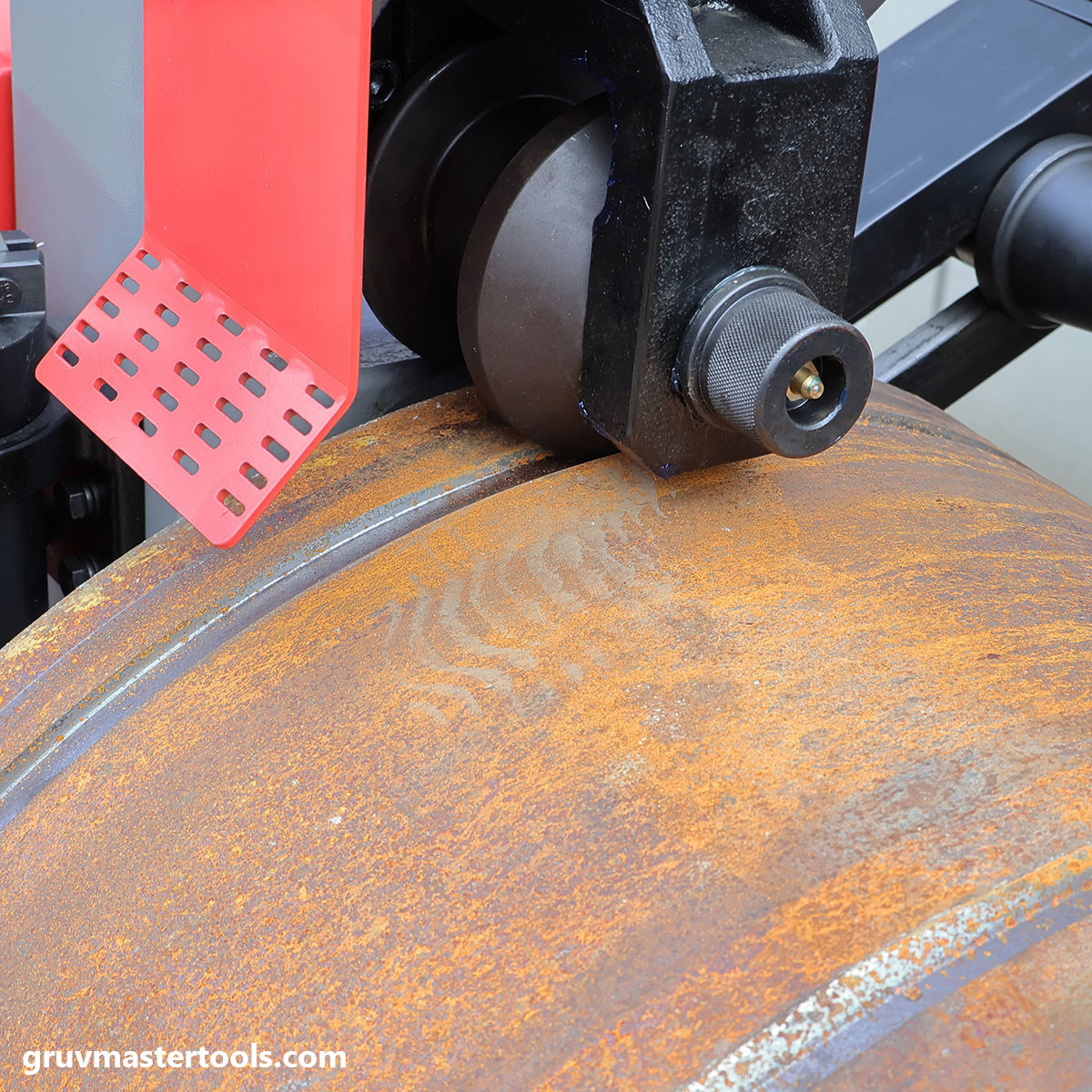
This video demonstrates the operation process of the AG-4X fully automatic roll grooving machine.
The video includes AGS roll set changeover, roll installation, pipe positioning, grooving depth adjustment, and automatic grooving operation on a steel pipe.
The AG-4X is designed for heavy-duty pipe grooving applications, supporting both OGS and AGS grooving standards. It is suitable for large diameter steel pipes with high efficiency and stable performance.
What Does This Mean for Grooving Machine Manufacturers?
From an equipment perspective, a grooving machine can support both OGS and AGS applications, but the machine must be designed with sufficient capability.
Key requirements include:
Strong Mechanical Structure
AGS grooving generally requires higher forming force, meaning the machine needs:
· A stronger frame structure;
· Higher transmission strength;
· Sufficient hydraulic output.
Dedicated Roller Sets
OGS and AGS normally require different roller configurations.
Changing from OGS to AGS is not simply replacing one roller. A complete roller set is usually required, including:
· Drive Roller
· Groove Roller
After changing the roller set, the groove dimensions must be checked, including:
· Groove Width
· Groove Diameter
· Groove Depth
· Gasket Seat Area
· Pipe Flare
A high-quality groove is not judged only by whether a groove has been formed. The final dimensions must meet the required specifications to ensure proper coupling performance.
A Simple Way to Understand OGS and AGS
Think of the groove connection as a locking system:
· Groove = Locking slot
· Coupling Key = Locking tongue
· Rubber Gasket = Sealing element
OGS is a standard locking design suitable for most conventional pipe systems.
AGS is an enhanced locking design with a wider and deeper groove profile, providing stronger mechanical engagement for larger pipes.
The groove and coupling must always match.
An AGS coupling cannot properly work with an OGS groove, and an OGS coupling cannot properly work with an AGS groove.
Conclusion
OGS and AGS are not two different grooving processes. They are two different groove-and-coupling systems designed for different application requirements.
OGS is widely used for conventional small and medium diameter piping systems.
AGS uses a wider, deeper, wedge-shaped groove design to improve mechanical engagement and is better suited for large-diameter, high-load piping applications.
For grooving equipment manufacturers, supporting AGS is not only about providing a different roller set. It also requires sufficient machine strength, forming capability, and dimensional control to achieve reliable groove performance.