
Product Knowledge | How Are Pipe Elbows Roll Grooved?
In grooved piping systems, roll grooving is not limited to straight pipe. Elbows and other pipe fittings also need a properly formed groove at the pipe end so they can be connected with grooved couplings.
Compared with straight pipe, elbows are shorter and have a curved shape, which makes positioning and rotation more difficult during grooving. For batch production, dedicated fitting roll grooving equipment is often a more practical solution because it is designed to handle short and irregularly shaped workpieces more consistently.
How Is Elbow Grooving Different from Straight Pipe Grooving?
When a straight pipe is roll grooved, the pipe can usually be supported by a pipe stand and rotated steadily during the operation.
An elbow is different.
Because of its shorter length and curved body, it cannot be supported in the same way as a long straight pipe. Stable positioning becomes more important so that the pipe end can rotate correctly around the grooving area.
In batch production, repeatedly positioning each fitting by hand can also increase processing time and create more variation between finished parts.
A dedicated fitting roll groover helps provide a more stable process for positioning, rotating, and grooving these types of workpieces.
How Is an Elbow Roll Grooved Automatically?
Once the elbow is properly positioned, the machine drives the fitting to rotate while the grooving roll gradually applies pressure to the pipe wall.
As the fitting continues to rotate, the groove is formed progressively around the full circumference until the required groove depth is reached.
The basic process can be summarized as:
Position the fitting → Start the machine → Rotate the fitting → Feed the grooving roll → Form the groove → Complete the operation
Automatic Roll Grooving Demo
The video below shows the actual roll grooving process on a pipe fitting:
Automatic Roll Grooving for Pipe Fittings
For repeated fitting production, an automatic process can reduce the need for continuous manual feeding and adjustment while improving consistency from one fitting to another.
What Can Be Checked After Grooving?
After the groove is completed, final groove dimensions should still be checked according to the applicable specification.
Before measurement, however, the finished fitting can also be visually inspected from several angles.
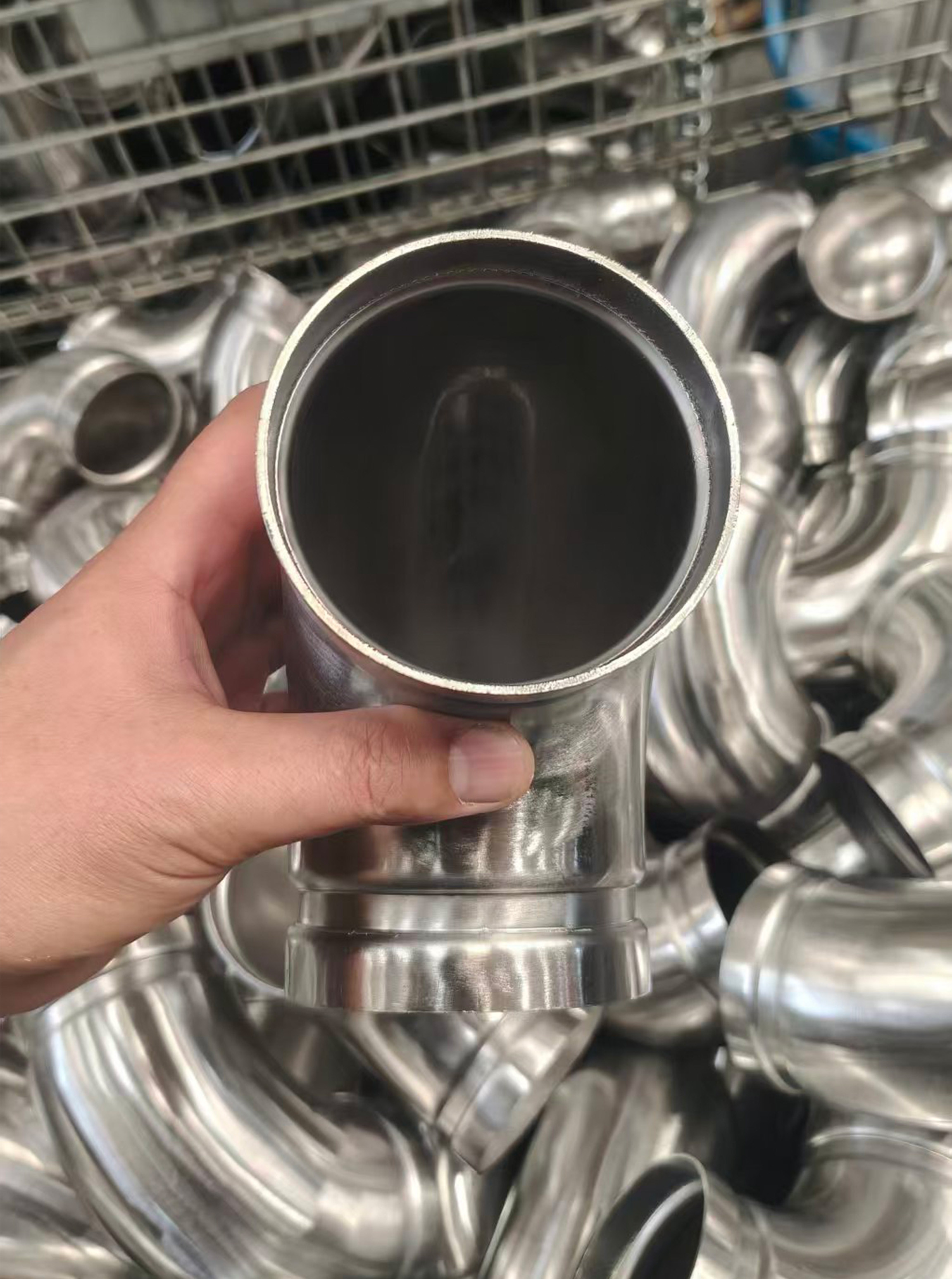
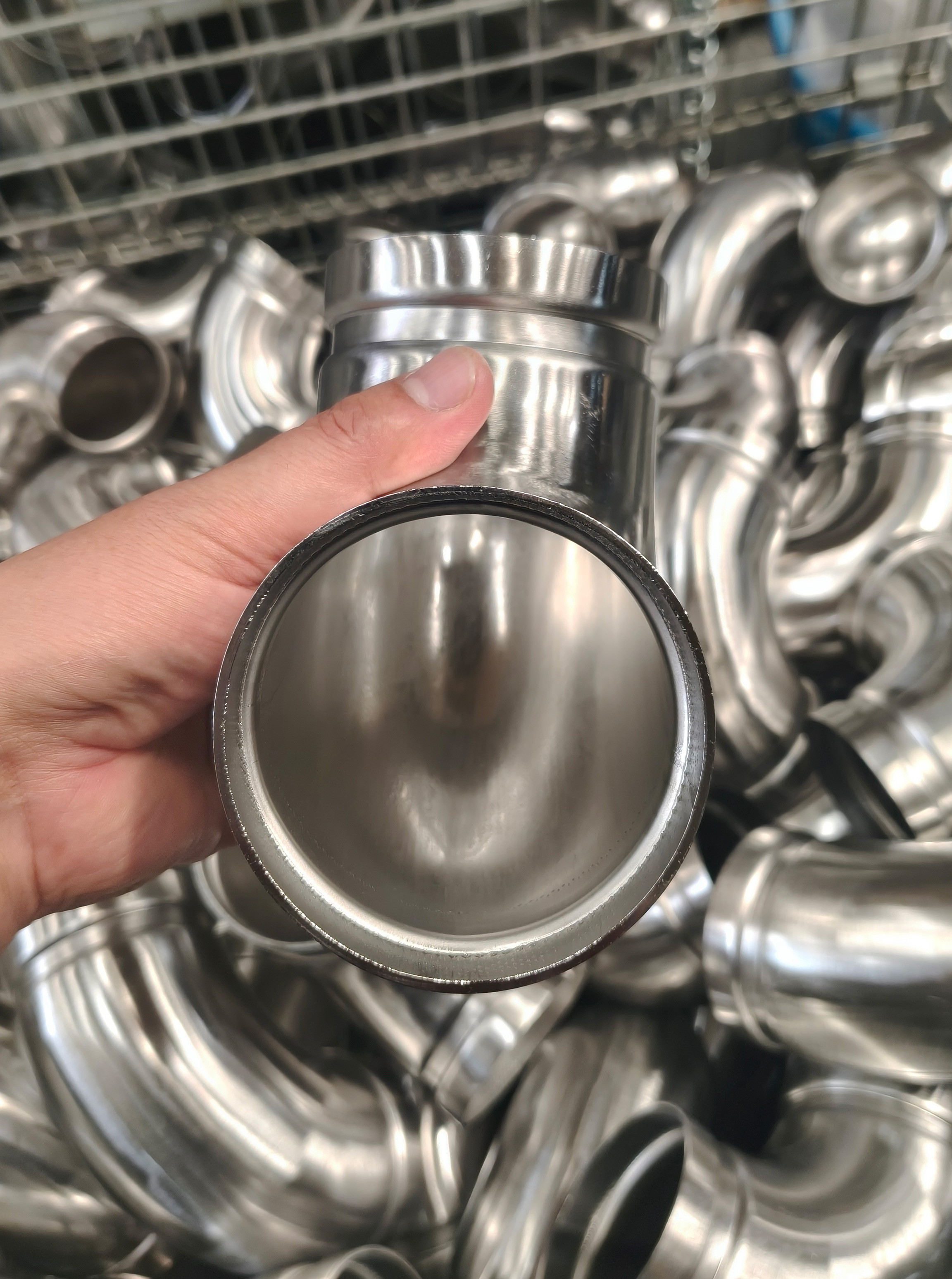
1. Check the Groove Around the Full Circumference
Viewed from the pipe end, the groove should run continuously around the entire circumference of the fitting.
A stable grooving process should produce a relatively uniform groove without obvious local variations.
2. Check the Inside of the Fitting
Roll grooving is a cold-forming process. Pressure is applied from the outside of the fitting, causing controlled deformation in the grooving area.
Looking inside the fitting provides another way to observe the formed area and check whether there is any obvious abnormal deformation near the pipe end.
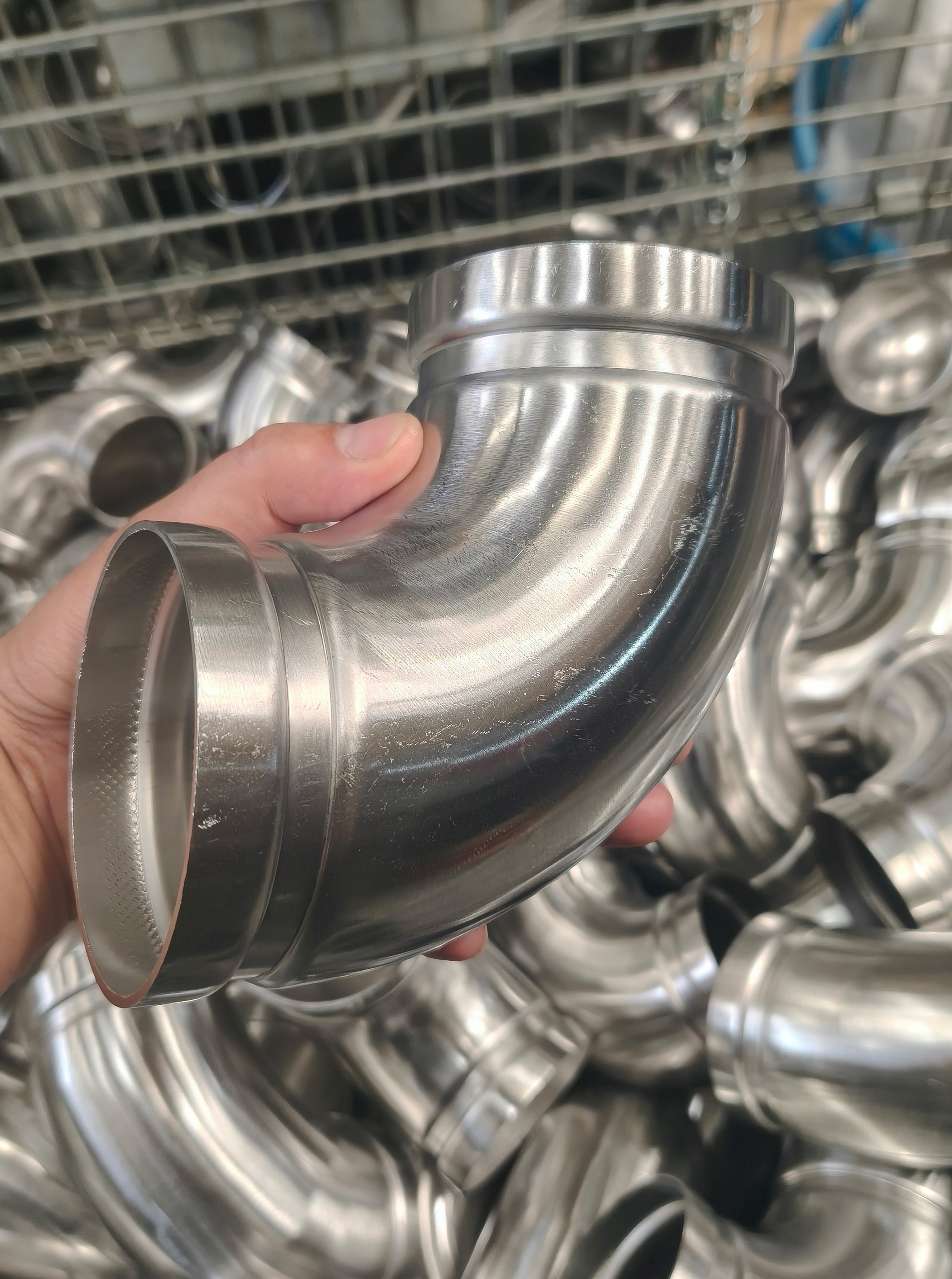
3. Check the Overall Groove Position
A side view makes it easier to see the position of the groove in relation to the elbow body.
Even though an elbow is short and irregular in shape, a complete circumferential groove can still be formed when the fitting is properly positioned and rotated during the process.
Why Use Dedicated Equipment for Fitting Production?
For occasional small-volume work, different grooving methods may be suitable depending on the application.
For fitting manufacturers, however, batch production places more emphasis on repeatability.
Dedicated fitting roll grooving equipment helps make the positioning, rotation, feeding, and groove-forming process more consistent from one fitting to the next.
For production work, that consistency is often just as important as the grooving speed itself.
More Than Just Elbows
Elbows are only one type of grooved fitting.
Depending on the fitting design and the machine configuration, similar roll grooving methods can also be used for other types of pipe fittings.
In the next article, we will show how different types of fittings are roll grooved using an automatic fitting roll groover.