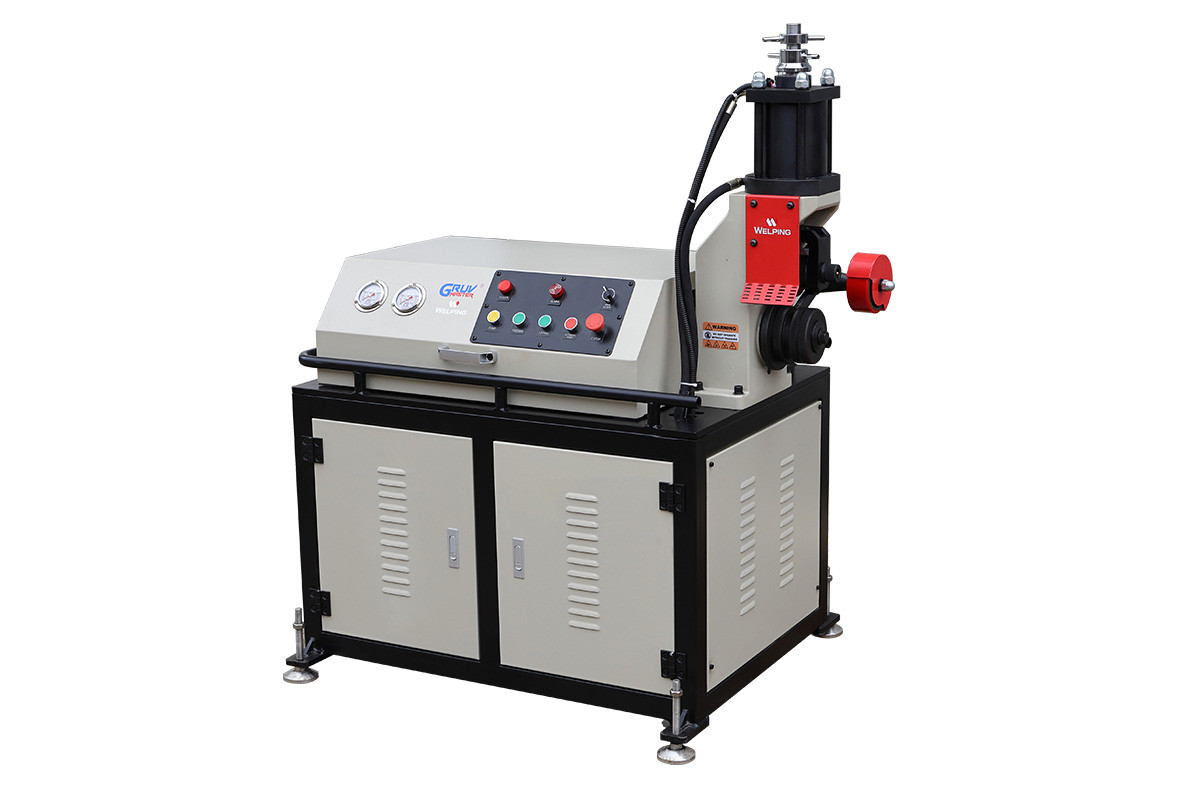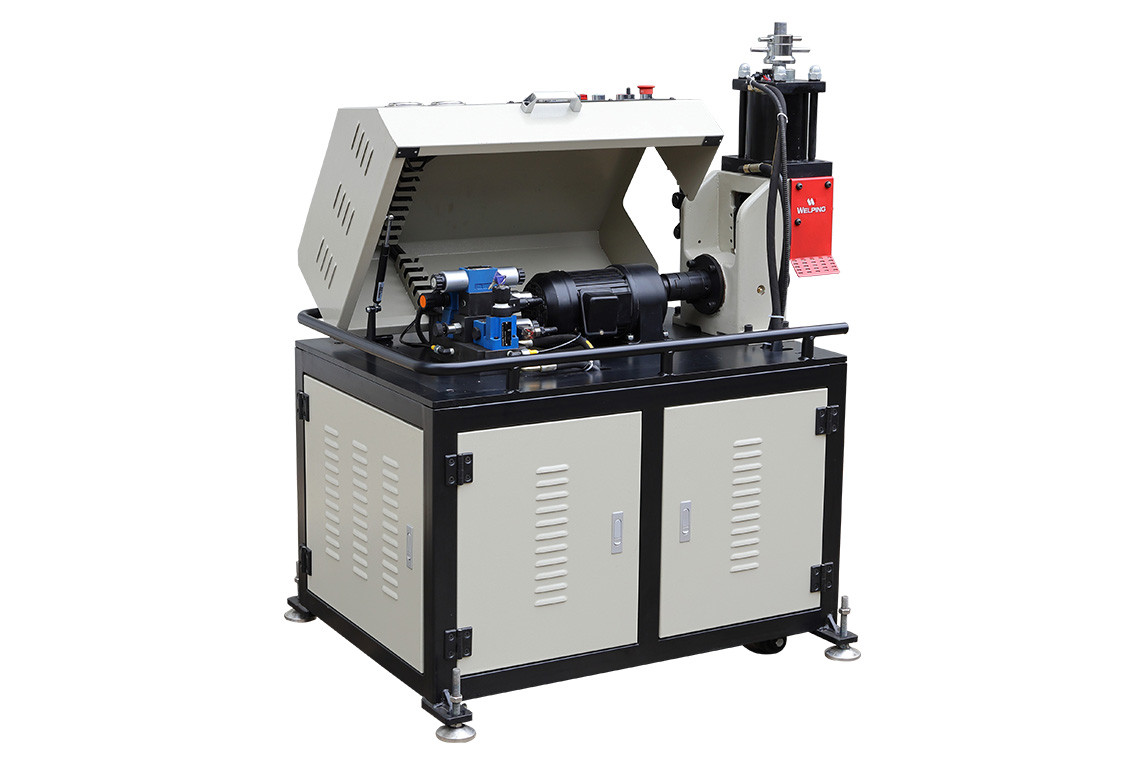
Can an Uneven Pipe End Still Be Grooved? An AG-4X Large-Diameter Pipe Test
Machine performance plays an important role in pipe grooving, but the condition of the pipe itself can be just as important.
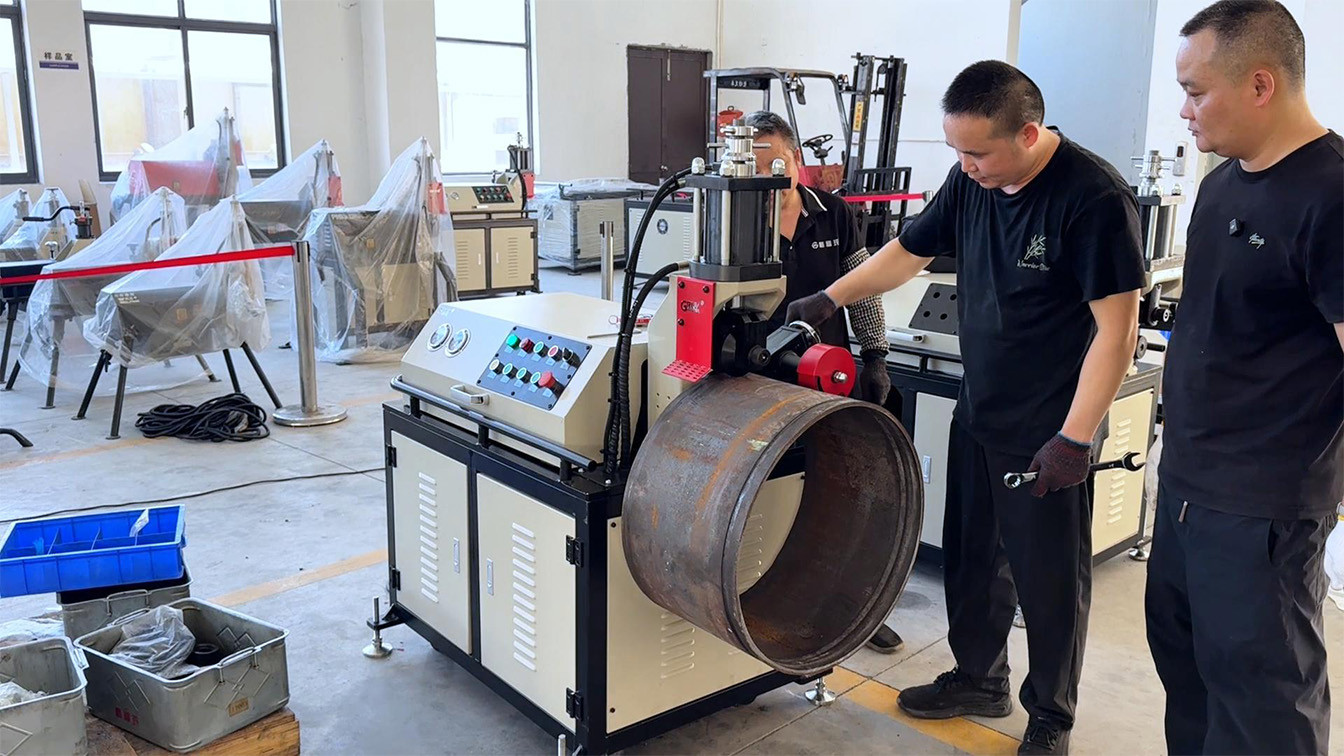
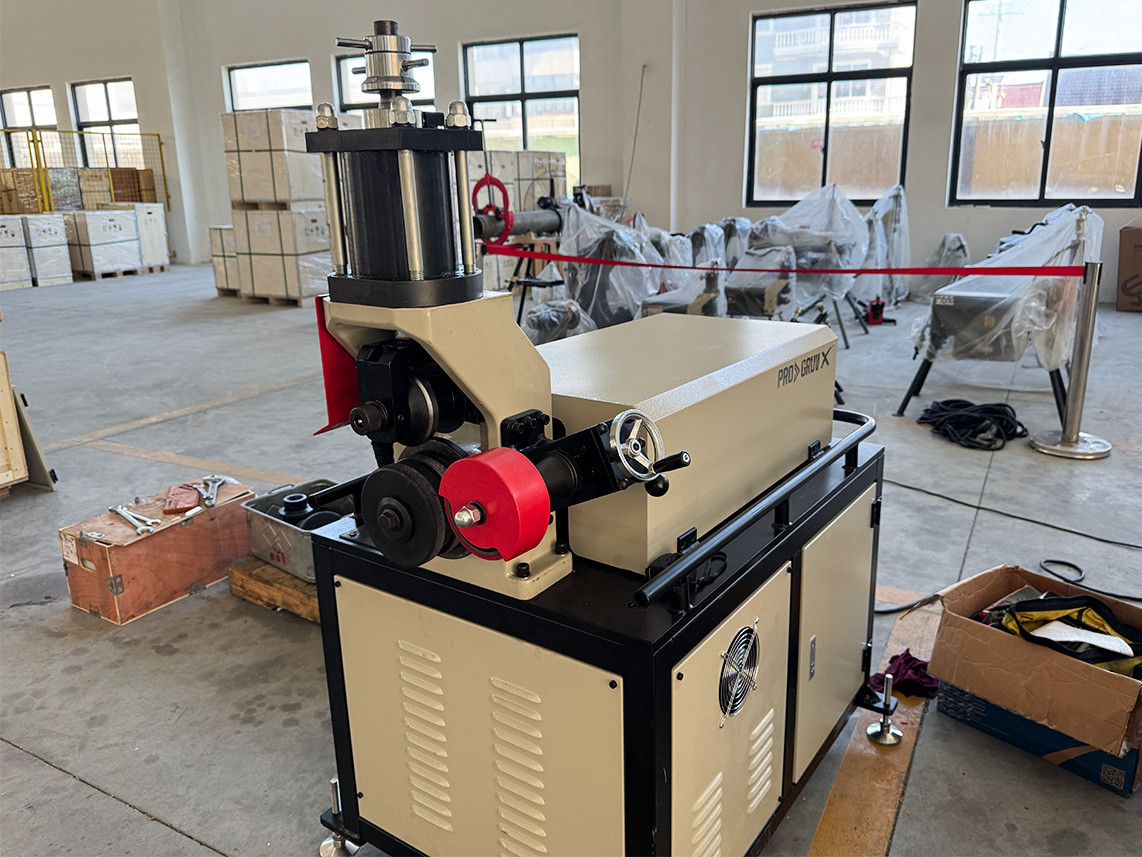
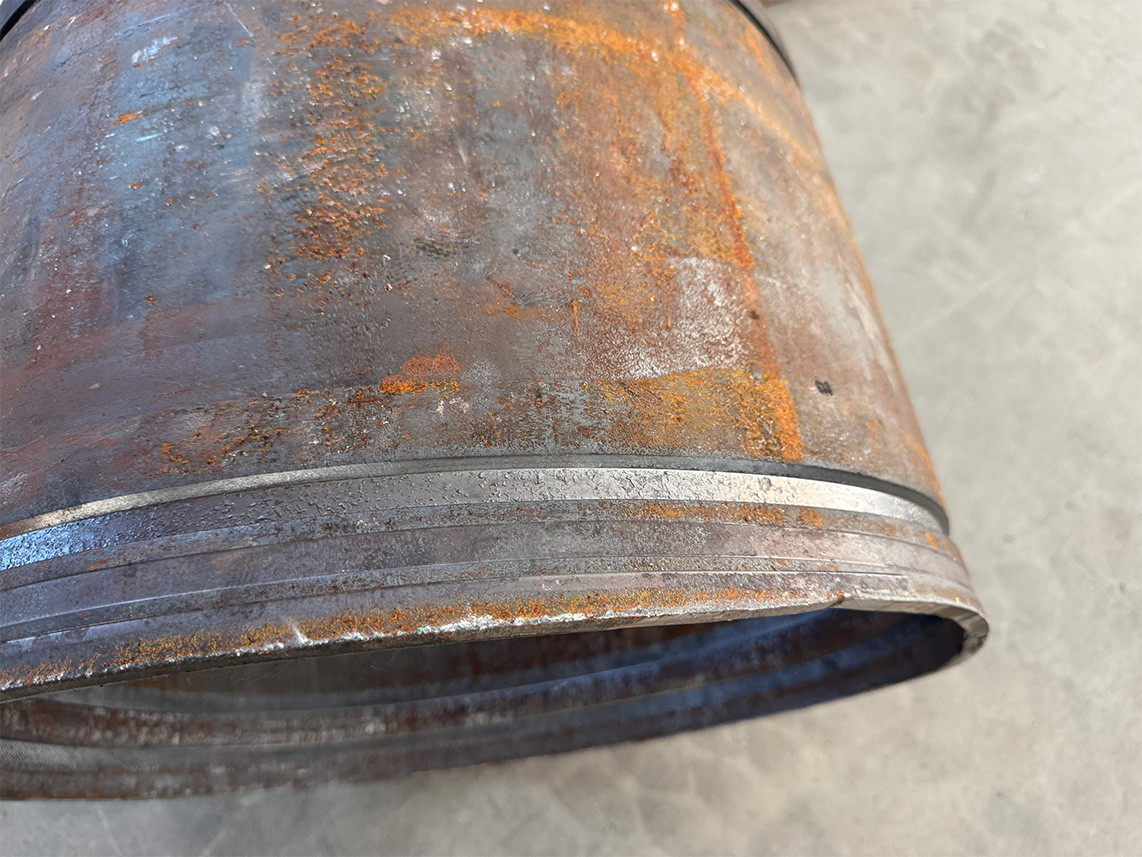
For this test, we used the AG-4X automatic roll groover to form a groove on a large-diameter steel pipe. Unlike a properly prepared test pipe, however, this pipe had an uneven end with a noticeable difference in height around the circumference. Its surface was also heavily weathered and covered with rust.
It was far from an ideal test piece, but it reflects the kind of pipe condition that may occasionally be encountered in workshops or on job sites.
What Happens When the Pipe End Is Uneven?
Ideally, the pipe end should be square to the pipe’s centerline. When it is not, the distance between the pipe edge and the grooving rolls changes as the pipe rotates.
As the higher and lower sections repeatedly pass through the rolls, the pipe may move from side to side. During this test, the axial movement was clearly visible while the pipe was rotating.
This kind of movement does not necessarily indicate a problem with the machine. It can also be caused by:
· An unevenly cut pipe end
· An out-of-round or deformed pipe
· Incorrect alignment between the pipe and the machine spindle
· Improper height or positioning of the pipe support
In this case, the uneven pipe end was the main reason for the movement.
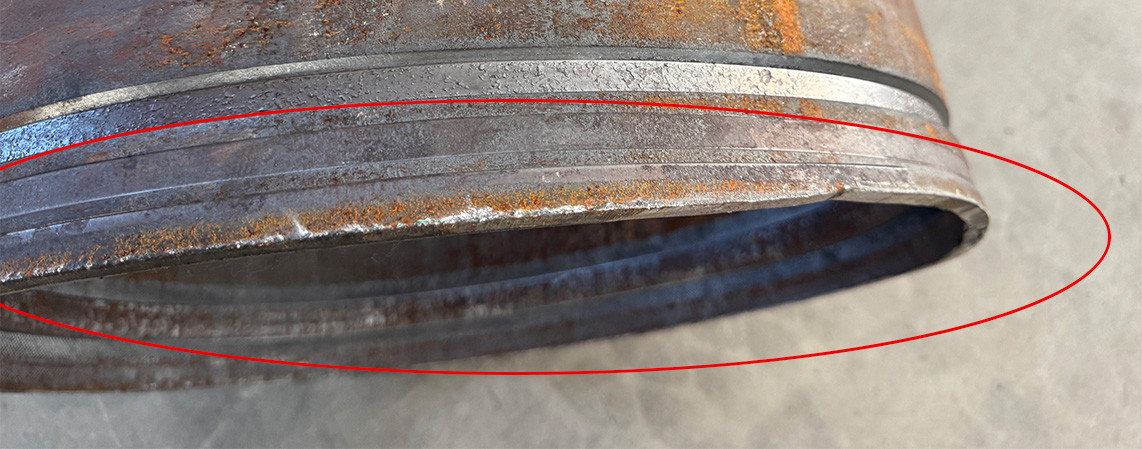
(The test pipe had a visibly uneven end with a rough, irregular cut edge.)
How the AG-4X Forms the Groove
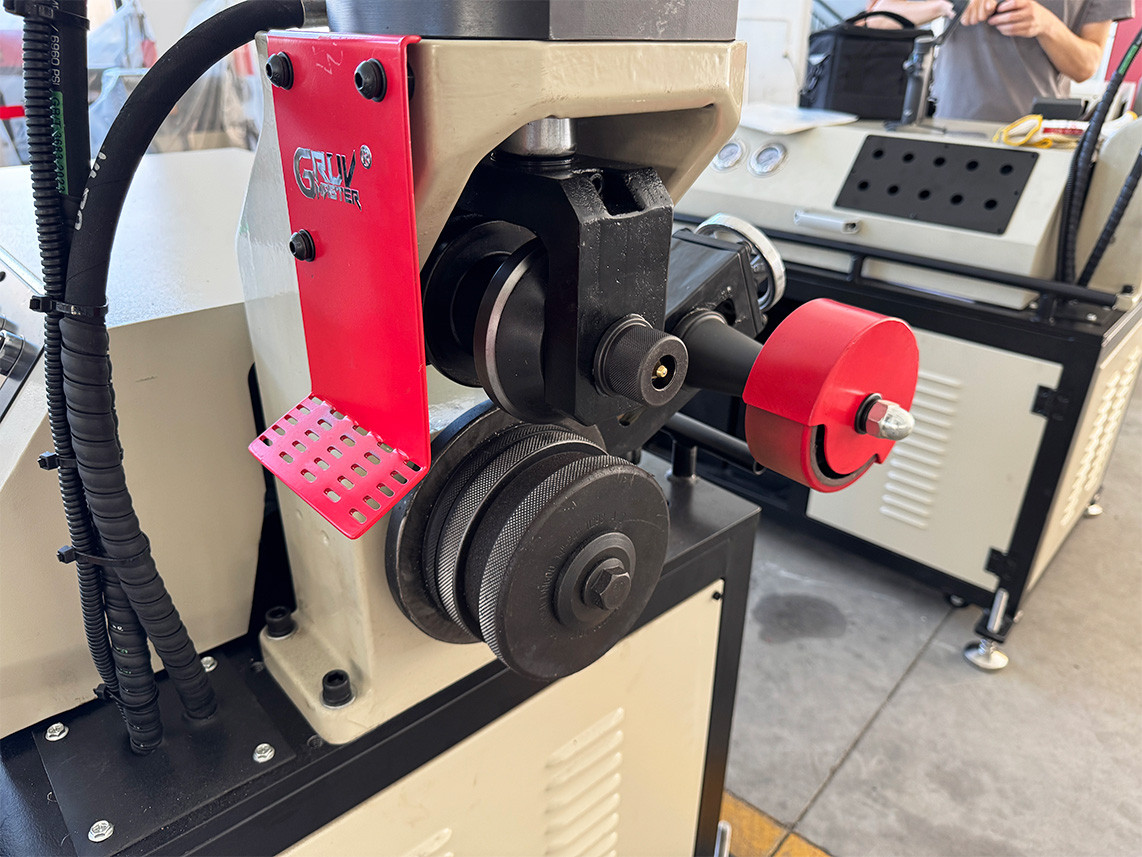
Once the pipe is correctly positioned, the drive roll rotates it continuously while the upper roll gradually applies pressure to the pipe wall.
The groove is not formed to its full depth in a single movement. Instead, it develops progressively as the pipe continues to rotate. Controlled, gradual feeding generally produces a more stable result and reduces the risk of excessive local deformation.
The AG-4X uses a heavy-duty drive system and roll structure designed for large-diameter steel pipes. When working with a pipe of this size and condition, correct pipe support, center alignment and feed control become especially important.
The Condition of the Pipe Is Reflected in the Finished Groove
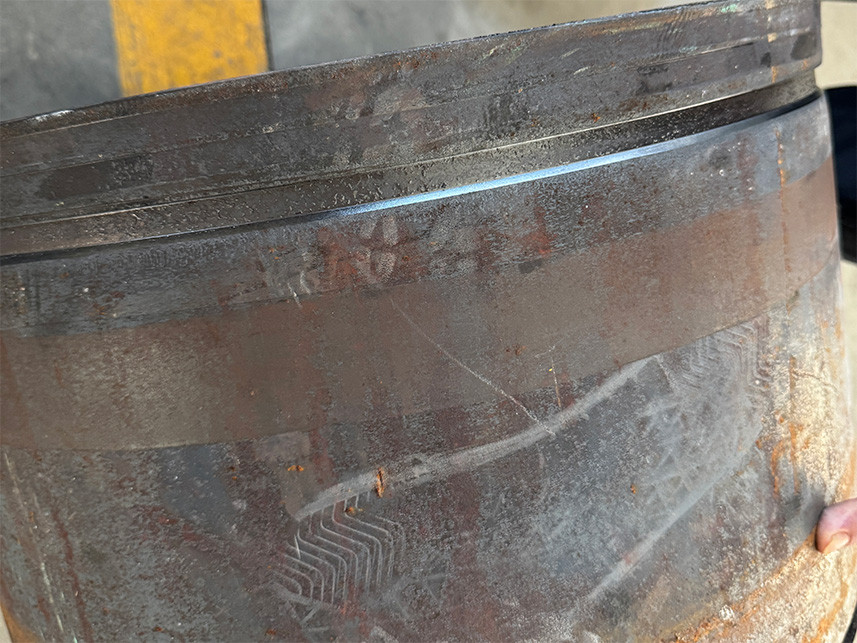
Despite the uneven pipe end, the AG-4X completed the groove around the full circumference of the pipe. The groove remained continuous, with no obvious interruption.
However, the finished pipe end also shows that the transitions on the two sides of the groove are not completely identical. Some areas appear smoother and more rounded, while others have a sharper transition.
This is understandable.
Because the pipe was moving axially during rotation, the contact position and forming pressure were not perfectly consistent throughout the process. As a result, groove width, depth and side profile can also vary.
In other words, the machine can complete the grooving operation, but it cannot fully compensate for significant errors in the original pipe end.
What Did This Test Show?
The purpose of this test was not to present a perfect groove produced on an ideal pipe. It was to observe how the AG-4X performed under less-than-ideal pipe conditions.
The test showed that:
· The AG-4X successfully rotated the large-diameter steel pipe
· The feeding and grooving process operated normally
· A continuous groove was completed despite visible pipe movement
· The final result clearly demonstrated how pipe-end condition can affect groove quality
It also shows why the finished groove should not be evaluated in isolation. Pipe-end squareness, pipe roundness, support positioning and machine adjustment must all be considered when assessing the result.
To see how these conditions affected the actual operation, watch the AG-4X grooving test below.
Watch the Full AG-4X Operation
This video presents the complete AG-4X operating process, including the AGS roll set changeover, pipe setup and the actual grooving operation. It also shows the visible pipe movement caused by the uneven pipe end and how the machine completed the full grooving process.
What Should Be Checked Before Grooving?
Preparation becomes increasingly important as pipe diameter and weight increase.
Before grooving, the pipe end should be checked to make sure it is reasonably flat and square to the pipe centerline. When the difference in height is too large, the end should be recut or corrected before processing.
It is also advisable to:
· Remove burrs, welding residue and loose rust from the pipe end
· Check the pipe for obvious deformation or out-of-roundness
· Adjust the pipe support so that the pipe center aligns with the machine spindle
· Rotate the pipe before applying full pressure and observe whether it moves excessively
· Select the correct roll set for the pipe diameter, wall thickness and material
· Apply pressure gradually rather than attempting to reach the final groove depth in one step
These preparations help improve both groove consistency and operating stability.
Machine Performance Cannot Replace Proper Pipe Preparation
The AG-4X completed a full-circumference groove on this large-diameter pipe, but the result also highlights an important point: even a capable machine cannot completely overcome poor pipe preparation.
In actual production, the final groove is determined by several factors working together, including the machine, roll set, pipe condition, support arrangement and operator adjustment.
With large-diameter pipes in particular, even a relatively small error at the pipe end can become much more noticeable as the pipe rotates. Preparing and aligning the pipe correctly remains one of the most important steps in achieving a stable and consistent groove.
Learn More About the AG-4X
The AG-4X automatic roll groover is designed for large-diameter steel pipes from 8 to 24 inches. For further information about its specifications, standard roll sets and optional AGS roll set, visit the product page below.