
Product Knowledge | Gruvmaster Electric Hydraulic Pipe Cutters: How They Work and Perform
Steel pipe cutting is a fundamental part of fire protection system installation, industrial piping and pipe prefabrication. Beyond cutting efficiency, the quality of the finished pipe end, blade durability and ease of operation are also important considerations when choosing cutting equipment.
The Gruvmaster CM Series combines electric drive with hydraulic feed to deliver practical cold-cutting solutions for a wide range of steel pipe sizes.
Through the following workshop photos and operation video, we take a closer look at how these machines work and what matters in everyday use.
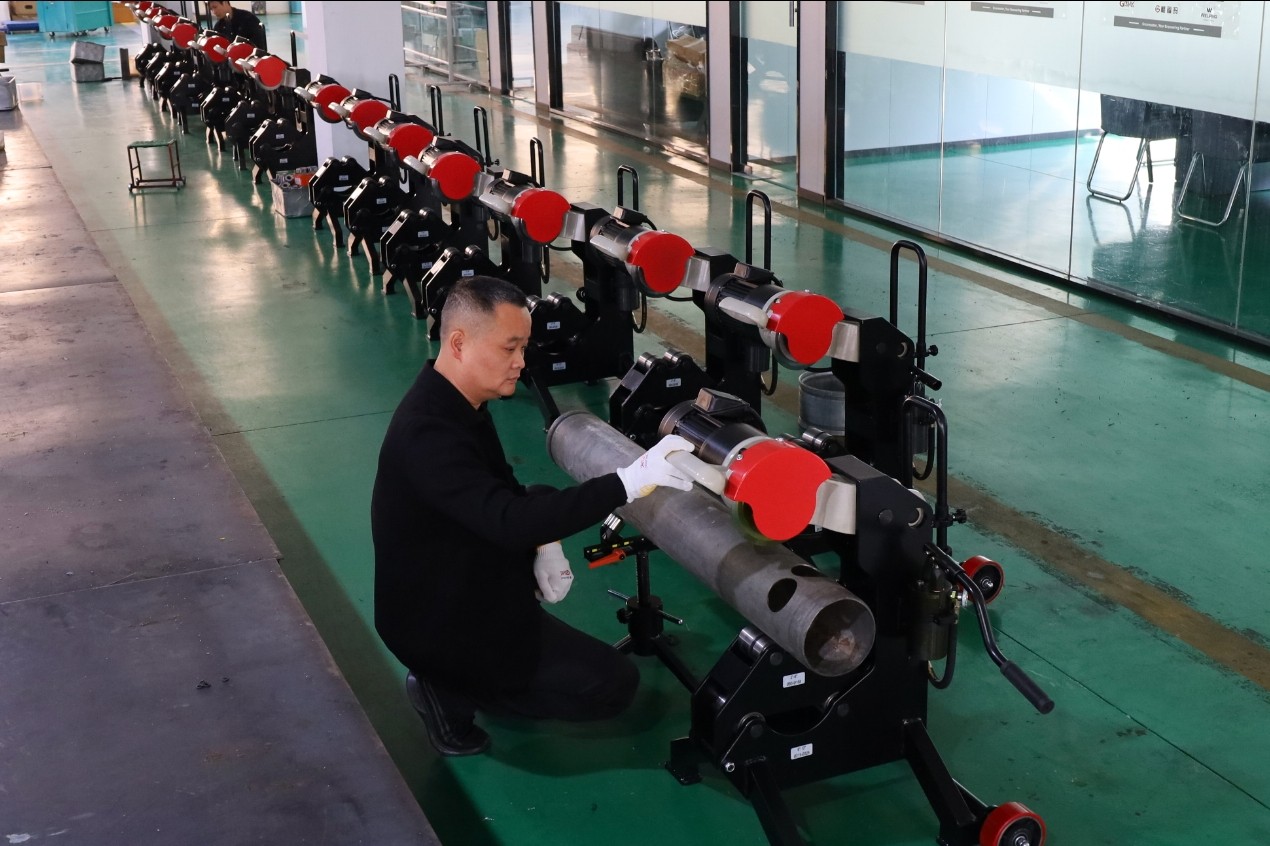
Electric hydraulic pipe cutters in the Gruvmaster production workshop.
01. How Does an Electric Hydraulic Pipe Cutter Work?
Unlike conventional abrasive cutting, rotary cold cutting does not rely on a high-speed abrasive disc to remove metal. Instead, the pipe rotates continuously while a cutting wheel gradually penetrates the pipe wall.
Three main systems work together during the cutting process:
· Electric Drive System: Provides continuous rotational power without the need to turn the pipe manually.
· Roller Support System: Supports the pipe and helps maintain stable rotation throughout the cutting process.
· Hydraulic Feed System: Allows the operator to gradually advance the cutting wheel using a manual hydraulic pump until the pipe is cut through.
This mechanical cutting method avoids the sparks and abrasive dust typically associated with abrasive cutting while minimizing heat generation at the pipe end.
It is a practical option for steel pipes that require further processing, such as roll grooving or welding.
02. See the Pipe Cutter in Action
Operating an electric hydraulic pipe cutter is relatively straightforward. The pipe is placed on the machine's support rollers, with an auxiliary pipe stand adjusted according to the pipe's length and weight.
Once the machine is started, the pipe begins to rotate. The operator uses the hydraulic pump handle to gradually advance the cutting wheel, which progressively penetrates the pipe wall as the pipe rotates.
The combination of electric drive and hydraulic feed reduces manual effort, making this type of equipment particularly useful for repetitive cutting tasks in pipe prefabrication workshops.
03. Does Higher Cutting Pressure Mean Faster Cutting?
When using a rotary pipe cutter, applying more pressure does not necessarily lead to better cutting performance.
Excessive hydraulic feed increases the load on both the cutting wheel and the drive system. It can also affect the stability of pipe rotation and increase the risk of pipe-end deformation, particularly when cutting thin-walled steel pipes.
Proper control of the hydraulic feed helps:
· Maintain stable pipe rotation throughout the cut.
· Avoid excessive loading on the cutting wheel.
· Reduce the risk of pipe-end deformation.
· Minimize premature blade wear and damage.
Sample ConteRather than simply aiming for a faster cut, operators should adjust the feed rate according to the pipe material, wall thickness and actual cutting conditions.
This is one of the practical advantages of manual hydraulic feed: it gives the operator direct control over the cutting process.nt
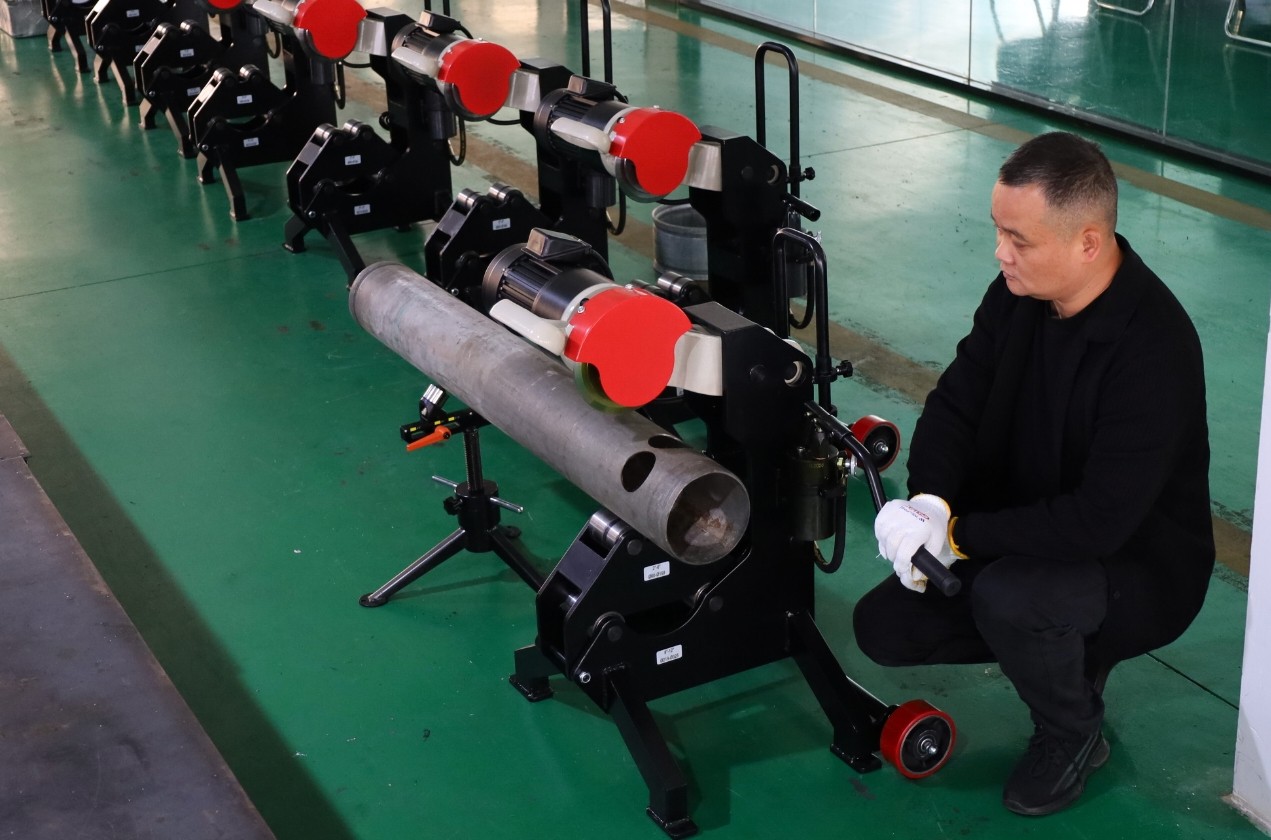
The operator controls the cutting wheel feed using the manual hydraulic pump.
04. Designed with Long-Term Performance in Mind
For professionals who cut steel pipes regularly, the initial purchase price is only part of the overall cost. Blade consumption, equipment maintenance and long-term reliability are equally important.
With these considerations in mind, Gruvmaster continues to improve the key components of its electric hydraulic pipe cutters, with particular attention to the cutting blade and hydraulic system.
Upgraded Cutting Blade
The cutting blade plays a direct role in cutting performance and operating costs. Through ongoing product development and practical cutting tests, Gruvmaster focuses on improving blade durability while maintaining effective cutting performance, helping reduce the need for frequent blade replacement.
Separate Pump and Cylinder with a Fully Sealed Hydraulic Pump
The separate hydraulic pump and cylinder design simplifies maintenance and component replacement. The fully sealed hydraulic pump also helps prevent external contaminants from entering the hydraulic system.
These improvements focus on the long-term operating experience rather than the performance of a single cut.
Visit our individual product pages to learn more about machine designs, key components and technical specifications.
05. Choosing the Right Pipe Cutter for Your Application
The Gruvmaster CM Series includes several electric hydraulic pipe cutters designed to meet different pipe size and processing requirements, from small-diameter steel pipes to large industrial piping.
When selecting a pipe cutter, consider not only the pipe diameter but also the pipe material, wall thickness, daily cutting volume and working environment.
Explore the individual models above for detailed specifications, product features, operation videos and available accessories to find the right machine for your application.
[Explore Gruvmaster Electric Hydraulic Pipe Cutters →]
Gruvmaster — Your One-Stop Partner for Pipe Grooving & Cutting Solutions.